
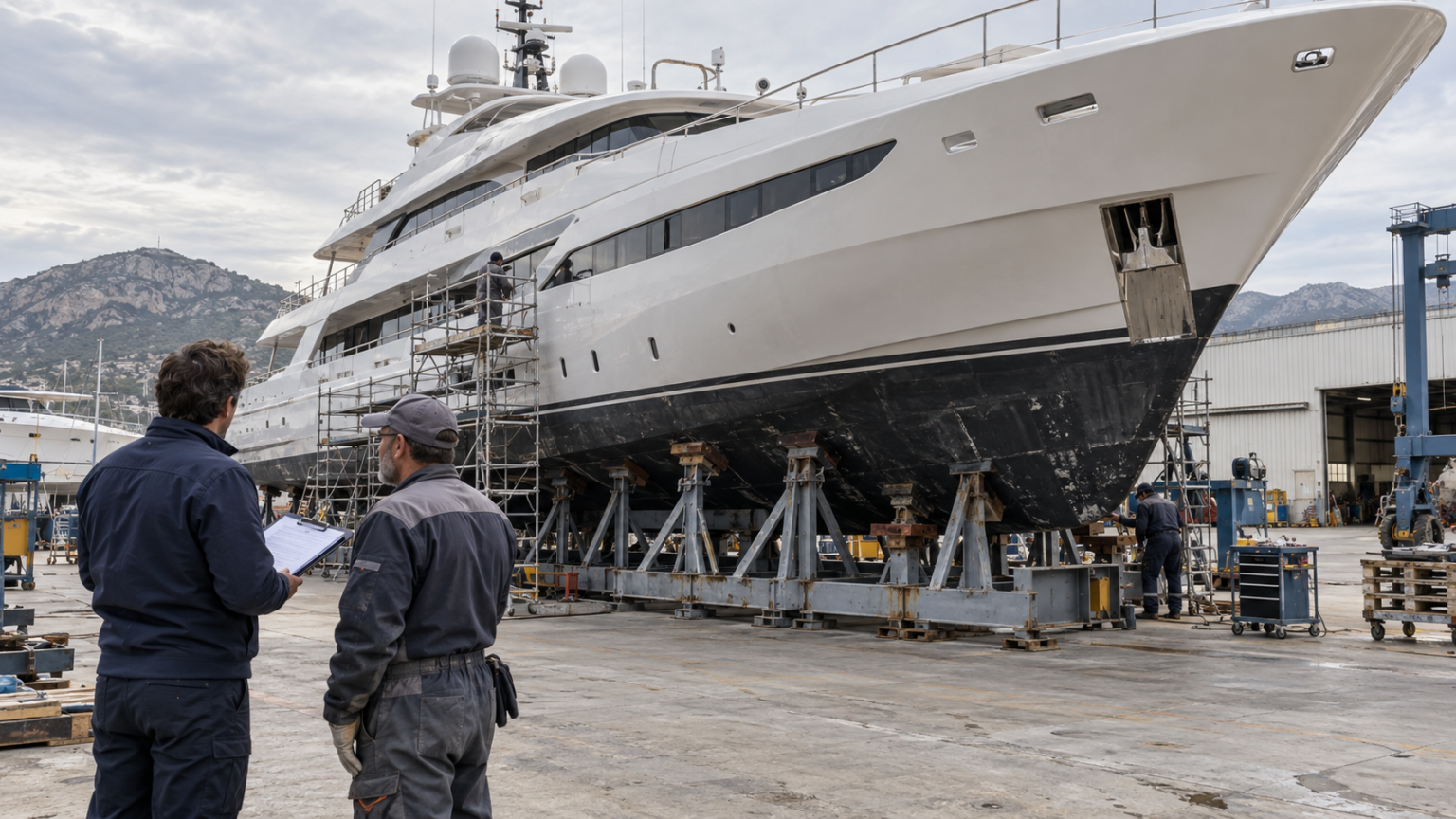
After a busy summer season, winter is when many yachts finally get time in the yard. For captains, managers and owners, it is the moment to refit, maintain and prepare the yacht for the year ahead. Spain offers a mild climate, well-established shipyards and contractors, and a wide choice of locations and facilities around the mainland and islands.
A good winter, though, depends on more than the work itself. Fiscal status, customs formalities and parts arriving on time all shape the budget and the schedule. Here is what to plan ahead.
Why Spain Works for a Winter Refit
Spain combines refit and repair facilities with good weather, well-connected ports and a deep pool of specialist contractors. Many non-EU yachts spend the winter here to carry out maintenance, upgrades and repairs, whether they are based in Palma, Barcelona, Valencia or elsewhere. You can explore the options in our guide to destinations in Spain, Portugal and Gibraltar, or go straight to Mallorca.
The key is to plan early. Yachts that start the conversation before the winter rush are the ones that avoid delays and unexpected costs.
Related reading: Why you should visit Spain as a superyacht winter destination.
TPA: Avoiding 21% VAT on Refit Works
TPA (Inward Processing) is a customs procedure that allows eligible non-EU yachts to carry out repairs, maintenance and refit works in Spain without paying the 21% Spanish VAT on qualifying works, services and spare parts. On a large project, the savings can be substantial.
TPA is not a self-service procedure, and even a small mistake can mean paying the full VAT on the works. It is worth having it handled by registered customs agents, which is the part of the process we manage for yachts every winter.
Related reading: The Ultimate TPA (IPR) Guide for Superyachts in Spain · The secrets behind TPA or Inward Processing, including closure and Temporary Admission considerations.
Customs Clearance: Smooth Arrivals, Departures and Imports
Winter work often means moving things across borders: equipment, materials, crew effects and technical parts. Each movement needs the right customs documentation, and mistakes can lead to delays, penalties or unnecessary taxes.
Our customs clearance service takes care of the formalities so the yacht team can focus on the project. Being customs agents ourselves means no intermediaries and fewer steps between you and the authorities.
Secure Customs Storage of Tenders and Vessel Parts
Another important point to consider this winter is the customs status of tenders and vessel parts that have been unloaded in Spain and require storage.
It is essential to determine whether these goods must be stored in a customs warehouse, depending on their customs status, or whether storage in a standard warehouse is permitted. Storing goods in a warehouse that is not suitable for their customs status may result in penalties imposed by the Spanish Customs authorities, as well as a claim for payment of the VAT due on the goods that have been incorrectly stored.
At Evolution Yacht Agents, our Customs Department can offer you access to our customs warehousing facilities, together with our expertise, to assess your specific situation and ensure that the storage process is handled in a tax-compliant and financially secure manner.
Related reading: Our New Temporary Storage Facility (ADT) in Mallorca.
Logistics: Getting the Right Items to the Right Place
A refit schedule can slip quickly if a delivery is late or stuck at customs. Good logistics is mostly about anticipating problems: knowing what is arriving, from where, when it is needed in the yard, and what paperwork it requires.
Deliveries and shipments, including international ones, are easier to control when one person keeps track of them and everyone involved stays informed. For larger works, it is also worth finding and coordinating trusted local contractors early, as the best ones book up fast.
Related reading: Logistics solutions for superyachts in Spain.
Spares: Parts When You Need Them
Few things stall a winter project like waiting for a part. Spares arriving from outside the EU can face import duties and VAT, and spares leaving the vessel have their own customs requirements. This is one of the most common areas where yachts run into trouble.
Eligible parts linked to a TPA can be placed under the regime, avoiding import taxes and VAT subject to the applicable customs requirements. The practical advice is to list the spares and equipment you will need as early as possible, so sourcing, import and delivery can be planned around the yard schedule rather than squeezed into it.
Related reading: The secrets behind TPA or Inward Processing, including how imported spare parts can be linked to the regime.
Don’t Forget the Rest of the Winter Checklist
While the yacht is in the yard, it is also a good moment to look at the season ahead: provisioning, interiors, crew arrangements and everything needed for when owners and guests return.
Winter Planning Checklist
- Confirm your yacht’s fiscal status and TPA eligibility.
- Choose your yard and contractors early.
- Open the TPA before works begin.
- List the spares and equipment you will need, and plan their import.
- Plan deliveries around the yard schedule.
- Appoint one agent to coordinate customs, logistics and compliance.
Planning Your Winter
Most winter headaches in Spain come down to timing: a TPA opened late, a part held at customs, a delivery that does not match the yard schedule. Starting the conversation early solves most of them.
If you would like to talk through your plans, you can contact Evolution Yacht Agents. Our team is available 24/7 across Spain, Portugal and Gibraltar.
