
What Owners and Companies Need to Know
When a yacht owner, management company, or shipyard arranges the delivery of parts, equipment, or a vessel itself between Spain and another EU country, one question comes up constantly: can this transaction be invoiced without VAT?
The answer depends entirely on whether the operation legally qualifies as an intra-community supply of goods. It also depends on whether the purchaser is acting in a business capacity and whether the yacht and the goods acquired are genuinely linked to the company’s economic activity. This distinction is particularly important in the yachting industry, where a vessel may be owned through a company but used exclusively for private or recreational purposes.
What Is an Intra-Community Supply of Goods?
Under Spanish tax law, an intra-community supply of goods is a sale of goods that are physically transported from Spain to another European Union member state, sold to a business or professional registered in that other country. When this qualifies, the transaction is exempt from Spanish VAT at origin—the idea being that VAT will instead be paid in the country of destination, avoiding double taxation within the EU.
This exemption is not automatic. It only applies when a specific set of legal conditions are met, and if even one of them fails, VAT must be charged in Spain as normal.
The Requirements for VAT-Exempt Intra-Community Delivery
According to Spanish tax regulations, particularly Law 37/1992 on Value Added Tax, and the criteria published by the Spanish Tax Agency, the following conditions must be considered:
1. Both Parties Must Be Businesses
The exemption applies to transactions in which the supplier acts as a business or professional and the purchaser is identified for VAT purposes in another EU Member State.
Crucially, the purchaser must be acting in its business capacity in relation to the transaction. The mere fact that a yacht is legally owned through a company does not automatically mean that every purchase made for the vessel qualifies as a business transaction.
2. The Yacht and the Purchase Must Be Linked to a Business Activity
For the corresponding VAT treatment to apply—particularly where the company intends to deduct or request a refund of VAT—the yacht and the relevant purchase must be genuinely linked to the company’s taxable economic activity.
For example, a pleasure or private yacht used exclusively for the personal enjoyment of its owner or beneficial owner would generally not give rise to a right to deduct or recover VAT merely because the vessel is held through a company. In those circumstances, the yacht would generally not be regarded as being used for the purposes of the company’s taxable economic activity.
By contrast, where a yacht carries out genuine and documented commercial charter activity, purchases such as parts, equipment or refit work directly connected with that activity may potentially qualify for the corresponding VAT treatment, provided that all other legal requirements are met.
Commercial registration by itself does not establish entitlement to VAT recovery. The company should be able to demonstrate the yacht’s actual commercial activity through charter agreements, invoices, accounting records, booking history and other supporting documentation. Where a yacht has both commercial and private use, the right to deduct or recover VAT may be restricted, apportioned or rejected depending on the circumstances.
3. A Valid Intra-Community VAT Number
The purchaser must hold a valid VAT identification number issued by another EU Member State and must have provided that number to the seller before the transaction.
The Spanish supplier carrying out intra-community operations must generally be registered in the Register of Intra-Community Operators (ROI). The purchaser’s VAT number should also be valid and verifiable through the EU’s VIES system.
Without a valid and verifiable VAT number, the exemption cannot generally be applied, regardless of where the goods physically end up.
However, holding a valid EU VAT number does not, by itself, prove that the yacht is used commercially or that the specific purchase is connected with the purchaser’s economic activity.
4. Actual, Documented Transport to Another EU Country
The goods must genuinely leave Spain and arrive in another EU Member State, whether the transport is arranged by the seller, the buyer, or a third-party carrier.
Crucially, this movement must be documented through delivery notes, CMR transport documents, bills of lading, carrier invoices, proof of receipt at destination, or equivalent evidence.
Tax authorities will not accept the exemption based on intent or invoicing alone. They require physical evidence that the goods crossed the border and were delivered in another EU Member State.
5. The Summary Declaration: Form 349
The seller is required to report the transaction through Form 349, the recapitulative statement of intra-community operations, in accordance with the applicable reporting requirements and deadlines.
This is not merely optional paperwork. Incorrect, incomplete, or inconsistent reporting may put the exemption at risk, particularly if the information does not match the purchaser’s VAT identification details or the supporting transport documentation.
6. Correct Invoicing
The invoice must be issued without Spanish VAT and should include the appropriate legal reference confirming the exemption, typically Article 25 of Law 37/1992 on Value Added Tax.
It should also contain the supplier’s and purchaser’s VAT identification numbers and a clear description of the goods and transaction.
Omitting the legal reference, using an invalid VAT number, or issuing a generic invoice may undermine the exemption even if other elements of the transaction appear to be correct.
Where Yacht Deliveries Commonly Fail This Test
In the yachting sector, one of the most frequent mistakes is assuming that any delivery involving a foreign-registered company automatically qualifies for VAT exemption. It does not.
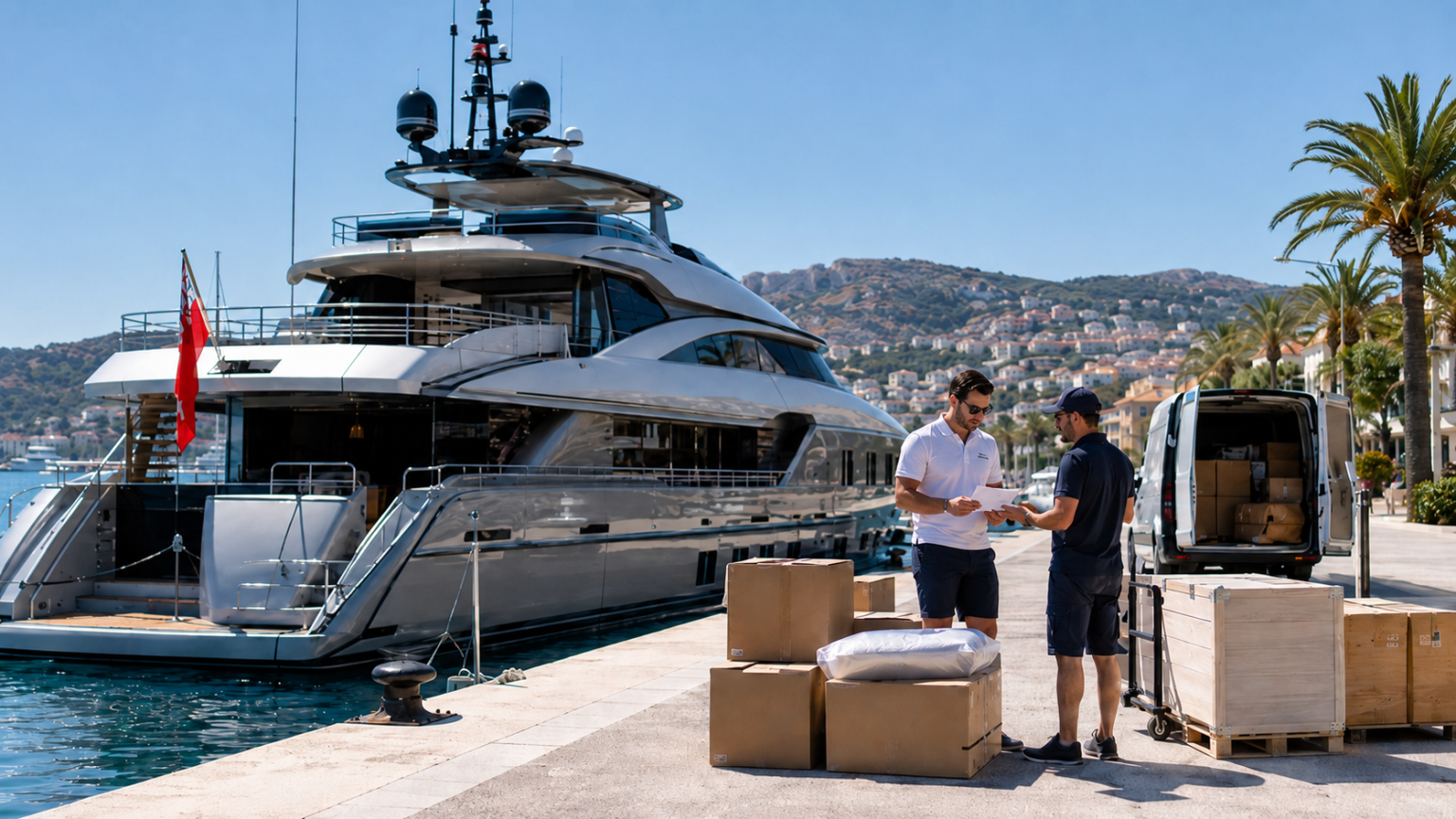
A clear example is when parts or equipment are supplied by a company based in Spain and delivered to a Spanish port—for example, to a shipyard or yacht located in Palma, Barcelona, Tarragona or another Spanish port.
This remains a domestic Spanish delivery, even if the invoice is addressed to a company registered in another EU country, such as Malta. The determining factor is not where the owning company is registered on paper, but where the goods are physically transported.
If the goods never leave Spain, the intra-community exemption does not apply and Spanish VAT must generally be charged, unless another specific VAT exemption is available.
Another common misunderstanding is assuming that a yacht qualifies for VAT relief simply because it is owned by a company or commercially registered. Tax authorities may consider the yacht’s actual activity and use rather than relying exclusively on its ownership or registration structure.
If the yacht is used exclusively for private or recreational purposes, purchases made for the vessel may not be considered linked to a taxable business activity. By contrast, if the yacht carries out genuine charter operations, the company may potentially qualify for the corresponding VAT treatment, provided that the commercial activity and the connection between the purchase and that activity can be properly demonstrated.
This distinction matters because it directly affects how much is legally owed on an invoice and whether any VAT paid may subsequently be deducted or reclaimed. Getting it wrong can create tax exposure for both parties, not only the seller.
What This Means for Owners with Foreign-Registered Companies
If your company is fully registered and VAT-compliant in another EU country—Malta being a common example in the yachting industry—a Spanish supplier may still be required to charge Spanish VAT when the goods are delivered within Spain.
Spanish VAT correctly charged on a domestic delivery may potentially be deductible or refundable, but recovery is not automatic.
The company must be able to demonstrate that it carries out a genuine economic activity and that the yacht and the relevant purchase are directly linked to that activity. A company-owned yacht used exclusively for private or recreational purposes would generally not qualify for input VAT recovery merely because the company holds a valid EU VAT number.
By contrast, if the yacht is genuinely operated commercially—for example, through documented charter activity—VAT incurred on parts, equipment, refit work or other expenses connected with that activity may potentially be deducted or reclaimed, subject to the applicable rules and review by the relevant tax authorities.
Where a yacht has both commercial and private use, the right to deduct or recover VAT may be restricted, apportioned or rejected depending on the circumstances. Commercial registration does not guarantee that a VAT deduction or refund application will be accepted.
The VAT treatment of the original delivery and the company’s subsequent right to deduct or request a refund are related but separate questions. Both must be assessed according to the facts and supporting documentation.
Frequently Asked Questions
Does having a VAT number in another EU country automatically exempt me from Spanish VAT?
No. A valid intra-community VAT number is only one of the requirements. The goods must also actually leave Spain, the transport must be documented, the transaction must be reported through Form 349, and the invoice must contain the appropriate legal reference.
The purchaser must also be acting in the relevant business capacity. A VAT number alone does not demonstrate that the yacht or the purchase is linked to an economic activity.
Can a delivery within Spain qualify as intra-community, even when the buyer is a foreign-registered company?
Generally, no. What matters is the physical destination of the goods, not only the buyer’s country of registration.
If the goods remain in Spain, Spanish VAT will normally apply unless another specific exemption is available.
Does owning a yacht through a company make it eligible for VAT exemption or recovery?
No. Corporate ownership alone is not sufficient. The company must carry out a genuine economic activity, and the yacht and the relevant purchase must be linked to that activity.
Can a private or pleasure yacht recover VAT on parts, equipment, or refit work?
Generally, VAT related exclusively to the private or recreational use of a yacht is not deductible as business input VAT, even when the yacht is owned through a company. Each ownership and operational structure should nevertheless be reviewed individually.
What if the yacht carries out commercial charter activity?
If the yacht carries out genuine and documented charter activity, purchases directly related to that activity may potentially qualify for VAT deduction or refund. However, commercial registration alone may not be sufficient, and the company must be able to demonstrate the yacht’s actual economic activity.
What happens if the yacht has both commercial and private use?
Mixed use may restrict the right to deduct or recover VAT. Depending on the circumstances and applicable legislation, the recoverable amount may need to be apportioned or adjusted.
What happens if VAT is charged incorrectly on an intra-community delivery?
It can trigger disputes with the tax authorities in either jurisdiction and may require the invoice to be corrected and reissued, together with amended Form 349 declarations.
Incorrect treatment may also lead to tax assessments, interest, penalties, or delays in obtaining a refund.
Can VAT paid in Spain be recovered by a company registered elsewhere in the EU?
Potentially, yes, through the applicable VAT deduction or refund procedure. However, the company must prove that it carries out a genuine economic activity and that the yacht and the expense are linked to that activity.
Recovery is not guaranteed simply because the company holds a valid EU VAT number or owns the yacht through a corporate structure.
Need Guidance on a Specific Case?
At Evolution Yacht Agents, legal and tax matters like this are handled directly by our in-house legal department, with maritime lawyers who understand the day-to-day realities of the yachting industry.
Whether it is a VAT question concerning a delivery, an assessment of a yacht’s commercial or private use, a contract review, or a dispute that needs resolving, our team is here to help.
As every yacht has its own ownership, operational and commercial structure, the appropriate VAT treatment should always be assessed on a case-by-case basis.
