
For most of the Mediterranean fleet, the winter season starts when the last charter guests leave. Yachts head to the shipyards in Palma, Barcelona and other Spanish ports for refit, maintenance and winter lay-up, and the work begins: removing, repairing, renewing and reorganising.
All of that creates a question that is easy to underestimate. Where does everything go while the yacht is in the yard? Tenders, artwork, spare parts, electronics and crew belongings all need a safe, documented place to wait, and for non-EU goods that place also has to meet customs requirements.
As yacht agents in Spain, we handle this question every year. This guide explains the options for yacht winter storage across Spain, including our facilities in Palma and Barcelona, as well as additional storage solutions available through our local partner network, how bonded storage works, and what is worth planning before the season begins.
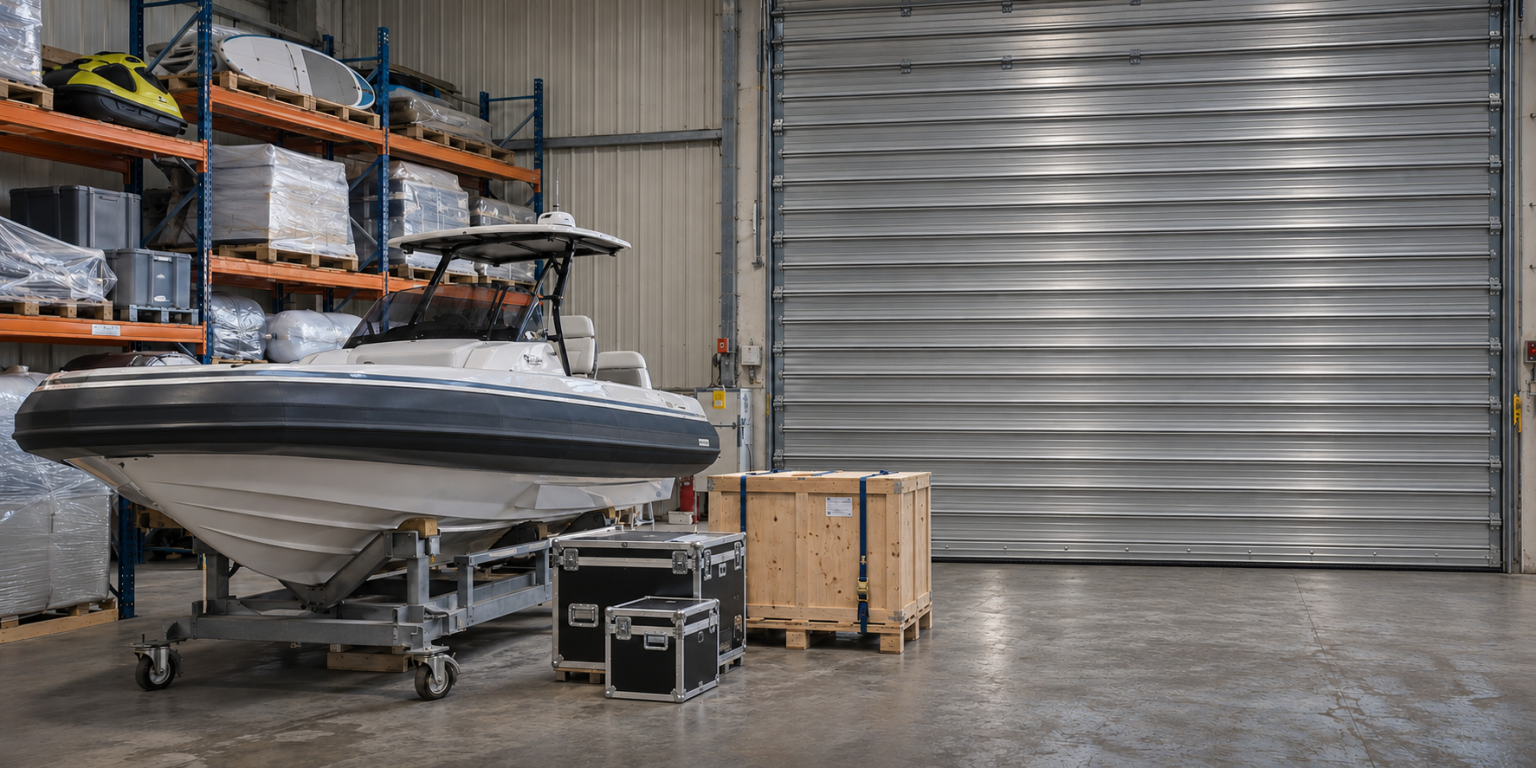
Bonded Warehouse in Palma: 2,500 m² Close to the Shipyards
A bonded warehouse is a facility where goods are stored under customs control. For non-EU goods, import duties and VAT are not due while the items remain in the warehouse. They are only settled if the goods are released for use in the EU, and if the goods are re-exported, those charges generally do not arise.
Our bonded warehouse in Palma covers 2,500 m² and was the first of its kind in the Balearics. In practice, bonded storage in Mallorca is useful for equipment purchased outside the EU, items waiting for a yacht that has not yet arrived, and materials for vessels that will leave Spanish waters again.
Beyond our own facilities, we can also coordinate storage solutions through a network of trusted local partners in other Spanish ports, depending on the location and specific requirements of each project.
ADT Facilities in Palma and Barcelona: Non-EU Goods Under Customs Control
A Temporary Storage Facility (ADT) allows non-EU goods to be held under customs supervision for up to 90 days. It suits shorter windows such as technical stopovers, transit and refit projects with a defined timeline.
We operate approved ADT facilities in both Palma and Barcelona. For yachts working with shipyards in either city, this means parts and materials can be received, stored and released with the correct customs clearance documentation, without relying on informal solutions that can cause delays later.
What Can You Store During the Winter?
The range goes well beyond boxes of spare parts. Winter storage for yachts typically includes:
- Tenders and water toys. Large, expensive and easily damaged by poor storage or repeated handling. Keeping them indoors and off the water over winter protects both the craft and the investment in it.
- Artwork and decorative pieces. Many owners prefer to remove artwork before a refit, when dust, vibration, tradespeople and humidity changes are part of daily life onboard. These pieces need careful packing, a stable environment and clear records of every movement.
- High-value equipment. Navigation and audiovisual equipment, removed furnishings, technical components and refit materials.
- Goods in transit. Shipments arriving ahead of the yacht or waiting to be installed.
- Crew belongings. Personal effects stored and transported according to each crew member’s needs.
The Logistics Behind the Storage
A warehouse is only as useful as the movement of goods in and out of it. Much of the real work happens around the storage itself, which is why our logistical support covers:
- Collection and transport from the yacht, marina or shipyard, with handling suited to the item
- Customs documentation for non-EU goods, from entry into storage to release
- Consolidation of deliveries from several suppliers so they reach the yard together
- Coordination with shipyards and project managers so deliveries match the refit schedule
- Inventory and traceability, so it is always clear what is where
For yachts in Spain on a temporary basis, this connects directly with TPA (Temporary Admission) management, since the status of the vessel and the status of its equipment often need to be handled together.
Why Plan Your Storage Before Winter Arrives
- The calendar rules. Shipyards and warehouses fill quickly once the charter season ends. Arranging yacht storage early avoids knock-on delays in the refit schedule.
- Customs leaves little room for error. Mistakes in the documentation of non-EU goods can cost time and money. Working with a yacht agent who also acts as customs agent reduces that risk.
- Value changes the requirements. A tender, a painting or a bespoke piece of joinery calls for different handling than standard equipment, and that is easier to organise before the yard is full.
- One point of contact. Storage, customs, transport and coordination with the yard are easier to manage when one team follows them from start to finish.
A few questions help to frame the plan:
- What needs to be stored, and what is its approximate value and fragility?
- Is any of it non-EU in origin, and will it be re-exported?
- For how long, and does the period have a fixed end?
- Who needs access, and how will movements be recorded?
More Than Storage
Storage is one piece of a wider winter season in Spain. Alongside it we coordinate refit logistics, TPA and VAT exemption for non-EU yachts, winter berth bookings in Palma, Barcelona, Tarragona and Málaga, and year-round support for crew. Each of these is easier to manage when the others are already in order.
Let’s Talk About Your Winter
If your yacht is spending the winter in Spain, tell us what you need to store, for how long and where the goods are coming from. You can reach the team through our contact page or at hola@evolutionagents.com.
